Print or Digital? Analysing Researchers’ Resource Preferences and Accessibility Challenges in Punjab's Higher Education Institutions
DOI:
https://doi.org/10.64474/3107-6351.Vol1.Issue3.3Keywords:
- Digital Literacy, Academic Libraries, Researcher Preferences, Information Resource Usage, Accessibility Barriers
Abstract
Abstract
Introduction: In today’s rapidly evolving academic research landscape, understanding researchers’ preferences and challenges in accessing information is essential. With the growth of digital infrastructure and the surge in research output, the choice between print and electronic resources has become a critical concern for both researchers and academic libraries. The study aims to compare the use of print and electronic information resources among researchers in selected universities of Punjab, India. Specific objectives include identifying usage patterns, examining influencing factors, and recommending strategies for academic libraries to better support research needs.
Materials and Methods: A mixed-methods approach was adopted, combining quantitative surveys (n = 250) with qualitative interviews. Data were collected from faculty members and PhD scholars across three public universities in Punjab. The survey measured usage frequency, preferences, and challenges, while interviews explored in-depth user experiences and contextual influences.
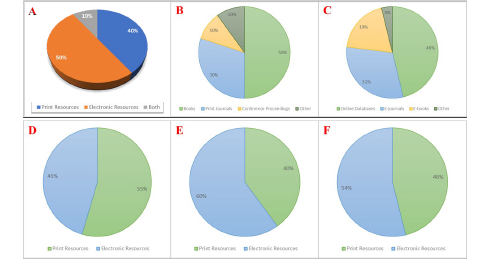
Results: Findings highlight a growing preference for electronic resources due to their accessibility, searchability, and instant availability. Print resources, however, remain significant for in-depth reading, long-form texts, and archival purposes. Factors influencing resource choice included discipline, access to digital infrastructure, and training in electronic tools. Humanities scholars leaned towards print, while STEM researchers favoured digital formats. Barriers identified included the digital divide, lack of awareness, and limited training.
Conclusion: The study concludes that academic libraries must maintain a balance between print and electronic resources. Enhancing digital infrastructure, providing targeted user training, and sustaining essential print collections are vital strategies to meet the diverse and evolving expectations of Punjab’s research community.