Monogenic Mutation Correction Using Crispr Base-Editing: Optimisation and Off-Target Profiling
DOI:
https://doi.org/10.64474/3107-6351.Vol1.Issue3.6Keywords:
- CRISPR Base Editing, Monogenic Mutation, Adenine Base Editor, Off-Target Profiling, Gene Correction, Genome Engineering
Abstract
Abstract
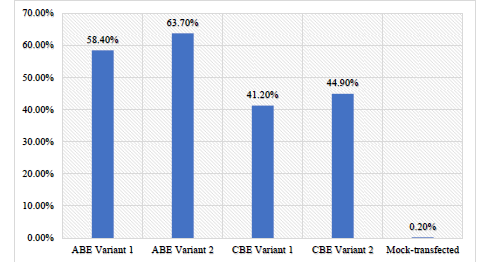
This study investigated into the off-target profiling and optimization of CRISPR base-editing tools for fixing a specific monogenic point mutation in human cell models. Editing performance, specificity, and cellular responses were carefully assessed using adenine and cytosine base editors in controlled experimental settings. The findings demonstrated that, while preserving high cell viability, adenine base editors outperformed cytosine base editors in terms of correction efficiency and off-target activities. The precision and dependability of the reported changes were further confirmed by thorough sequencing-based investigations. These results highlight important factors for developing therapeutic genome-engineering methodologies and show the possibility of improved base-editing tools for accurate and secure gene correction applications.